
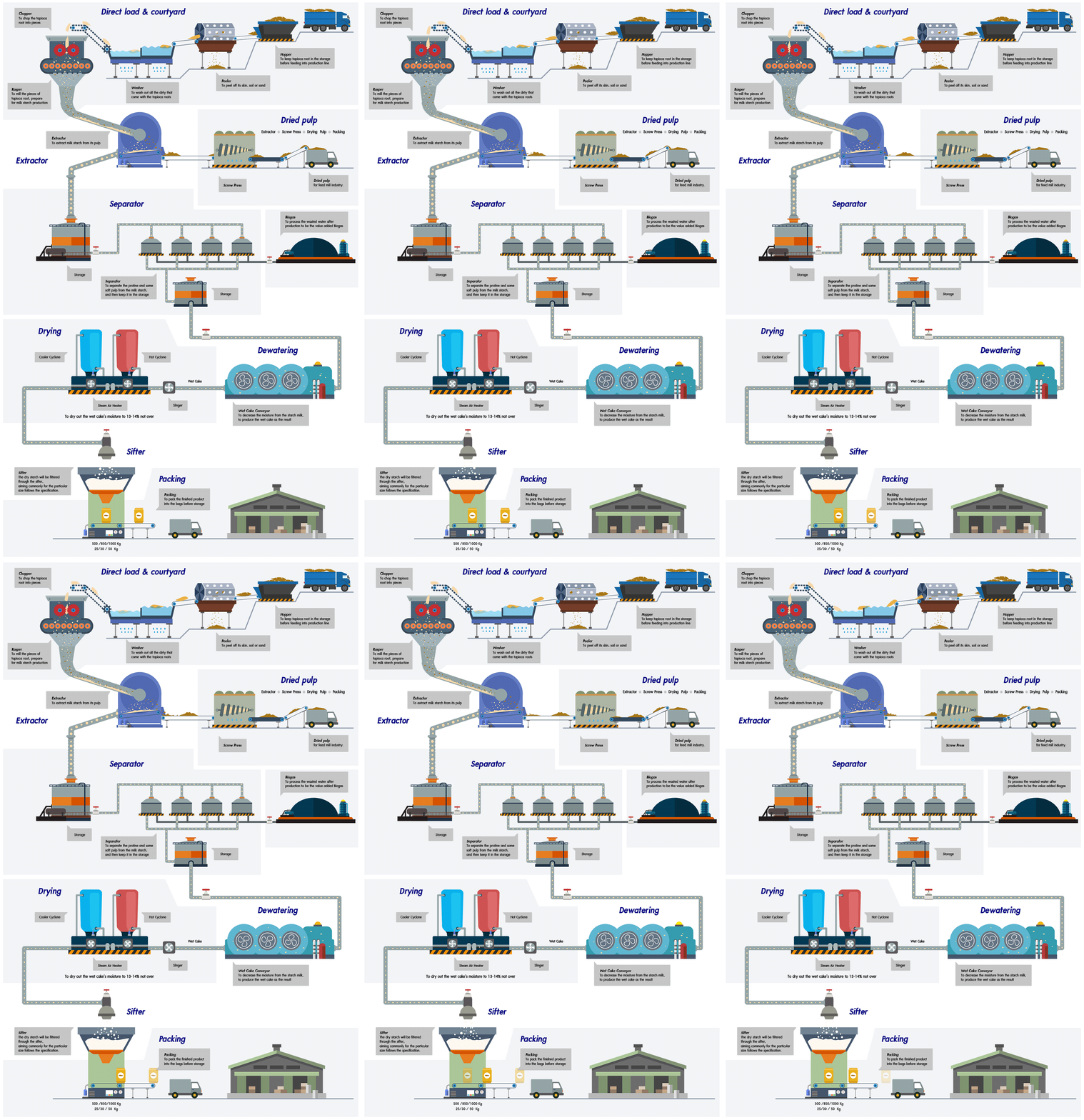
Production Process of Native Tapioca Starch
At Sisalim Tapioca Starch, our Native Tapioca Starch is produced from carefully selected fresh cassava roots using a modern and hygienic manufacturing process. Throughout every stage of production, the starch remains in its natural form without any chemical modification, preserving its original functional properties and ensuring premium quality.
1. Fresh Cassava Selection
The production process begins with the selection of freshly harvested cassava roots from trusted local farmers. Only mature, healthy cassava with high starch content is chosen to ensure superior product quality and maximum starch yield.
2. Washing & Cleaning
The cassava roots are thoroughly washed using clean water and advanced washing equipment to remove soil, sand, stones, and other impurities. This step ensures a clean and hygienic raw material for processing.
3. Rasping
The cleaned cassava roots are finely rasped to break down the plant cells and release the starch granules. This process maximizes starch extraction while maintaining the natural characteristics of the starch.
4. Starch Extraction
The cassava pulp is mixed with water and passed through a series of extraction and screening systems. The starch milk is separated from fibers and other insoluble materials, resulting in a high-purity starch suspension.
5. Purification
The extracted starch undergoes multiple purification stages to remove fine fibers, proteins, pigments, and other impurities. This process enhances the starch's whiteness, purity, and overall quality.
6. Dewatering
The purified starch slurry is mechanically dewatered using centrifugal equipment to reduce moisture content before the drying process.
7. Drying
The starch is dried using a modern flash drying system under carefully controlled temperatures. This ensures consistent moisture content while preserving the natural properties and functionality of the native tapioca starch.
8. Sieving & Quality Control
The dried starch is finely sieved to achieve a uniform particle size. Each production batch is tested in our quality control laboratory for moisture, purity, viscosity, whiteness, microbiological safety, and other key quality parameters to ensure compliance with customer specifications and international standards.
9. Packaging
The finished Native Tapioca Starch is packed in strong, moisture-resistant bags suitable for both domestic distribution and international export. Packaging options include 25 kg, 50 kg, jumbo bags, and customized packaging based on customer requirements.
10. Storage & Export
The packaged products are stored in clean, dry warehouses before shipment. Our efficient logistics and export procedures ensure that every shipment reaches customers in excellent condition while maintaining product quality throughout the supply chain.
Quality Commitment
Our Native Tapioca Starch is produced without chemical modification, preserving its natural characteristics while delivering consistent quality, high purity, excellent whiteness, and reliable performance for a wide range of food and industrial applications. Every production stage is conducted under strict quality control to meet the expectations of customers worldwide.
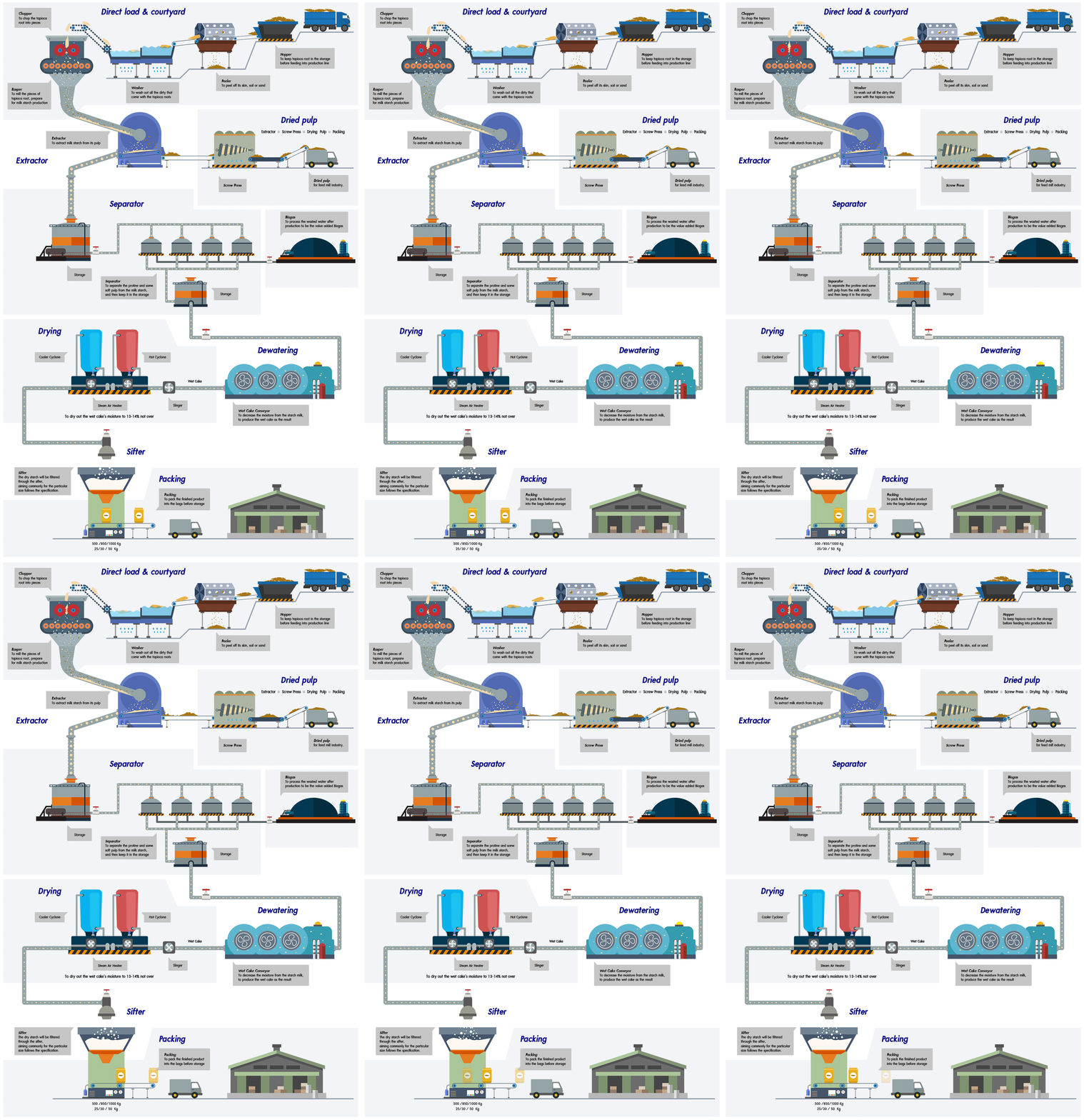
Production Process of Modified Tapioca Starch
At Sisalim Tapioca Starch, our Modified Tapioca Starch is manufactured using carefully selected fresh cassava roots and advanced processing technology. The production process combines efficient starch extraction with controlled chemical modification to enhance the functional properties of native tapioca starch. Every stage is carried out under strict quality control to ensure consistent performance, food safety, and compliance with international standards.
1. Raw Material Receiving & Feeding
Fresh cassava roots are delivered from trusted local farms and transferred into a raw material storage bunker. The bunker is equipped with a vibration feeding system that evenly distributes the cassava onto a belt conveyor, ensuring a continuous and stable production flow.
2. Peeling
The outer peel of cassava, which contains cellulose and hemicellulose but very little starch, is removed to improve starch purity and whiteness. Proper peeling also minimizes impurities and reduces discoloration during processing.
3. Washing & Cleaning
The peeled cassava roots are thoroughly washed with clean water to remove soil, sand, stones, and any remaining peel. This process protects processing equipment from excessive wear while reducing ash content and improving the overall quality of the starch.
4. Rasping
The cleaned cassava roots are finely rasped to break down the cellular structure and release the starch granules. Efficient rasping is one of the most critical steps, as finer grinding significantly increases starch extraction efficiency.
5. Fiber Separation & Starch Extraction
The cassava pulp is mixed with water and pumped through a series of extraction screens and centrifugal separators with different mesh sizes. This process separates starch milk from coarse fibers and pulp while recovering as much free starch as possible, maximizing production efficiency.
6. Starch Purification
The extracted starch milk is purified using a multi-stage hydrocyclone system. Soluble impurities, proteins, pigments, cell sap, and other non-starch components are removed, resulting in a highly purified starch slurry ready for the modification process.
7. Chemical Modification
This is the core stage of Modified Tapioca Starch production. Food-grade modifying agents are accurately dosed into the starch slurry under carefully controlled reaction conditions.
For Acetylated Distarch Adipate (INS 1422) or Acetylated Starch (INS 1420), hydroxyl (-OH) groups on the starch molecules are partially substituted with acetyl groups. This modification significantly improves the starch's functional performance, including:
Improved heat stability
Enhanced viscosity stability
Better freeze-thaw resistance
Reduced retrogradation
Lower syneresis (water separation)
Improved processing stability in food applications
The modification process is carefully monitored to ensure compliance with international food safety regulations.
8. Washing & Concentration
After modification, the starch slurry passes through multiple hydrocyclone washing stages to remove residual processing chemicals and remaining impurities. The starch is then concentrated to achieve the desired solids content before dewatering.
9. Dewatering
The concentrated starch slurry is dewatered using high-speed centrifugal separators. This process removes excess water and produces wet modified starch with a controlled moisture content suitable for efficient drying.
10. Flash Drying
The wet starch is dried using a pneumatic flash drying system. The starch particles are suspended in a stream of hot air for a very short period, allowing rapid moisture removal while preserving the functional properties developed during modification.
The dried starch is separated through cyclone collectors, cooled to room temperature, and prepared for the final processing stage.
11. Sieving, Packaging & Storage
The dried Modified Tapioca Starch is finely sieved to ensure a uniform particle size and smooth texture. Each production batch undergoes comprehensive laboratory testing for moisture content, viscosity, pH, degree of substitution, microbiological safety, and other quality parameters.
The finished product is packed in moisture-resistant export-grade bags, typically available in 25 kg, 50 kg, or customized packaging according to customer requirements. The packaged starch is stored in a clean, dry warehouse under controlled conditions to maintain product quality before domestic distribution or international export.
Our Quality Commitment
Every stage of our Modified Tapioca Starch production process is designed to ensure consistent quality, excellent functionality, and reliable performance. Through advanced manufacturing technology, precise process control, and rigorous quality assurance, Sisalim Tapioca Starch delivers high-performance modified starch solutions for the food, beverage, paper, textile, adhesive, and other industrial sectors worldwide.